By Dr. Kevin Keefer
Air Force Institute of Technology
The Air Force Institute of Technology’s Center for Directed Energy (AFIT CDE) provides graduate students with the tools to advance leading edge aerosol research of immediate relevance to the Department of War (DoW) and other cabinet level offices, including the Department of Energy and Department of Homeland Security seeking to advance U.S. National Security.
The Center operates a wide array of atmospheric aerosol instruments—including one-of-a-kind bio-aerosol sensors—which readily link student research to Air and Space Force capability needs, as well as Army and maritime gap filling endeavors.
Student research underwrites a key Center objective: prototype a minimal footprint atmospheric effects decision aid to predict and assess directed and kinetic energy performance and enable intelligence surveillance and reconnaissance capabilities anywhere on the globe.
The Center has deployed its aerosol instrumentation to characterize aerosols and associated optical effects of sizes that span sub-nano meter size, which are approximately one ten-thousandth the width of a human hair, through micron scale coarse particles, or the seeds for cloud and fog droplets. The instruments are strategically located to sense wide-ranging climatologies, such as rural, urban, desert, and arctic.
Such instrumentation has been deployed to support DoW field tests of prototype directed energy capabilities. The aerosol characterization and follow-on student analysis and publications have immediately benefited system developers and engineers as they strive to field next generation system capabilities.
Additionally, the Center has fielded a full complement of instrumentation to research long-term aerosol climatology and the implications for DoW next generation capabilities. This hub is deployed close to the AFIT campus at Wright-Patterson AFB, Ohio, and operates twenty-four hours, seven days a week, 365 days a year. The measurements are streamed and posted alongside measurements collected at other worldwide sites.
The AFIT site, as well as the other worldwide sites, are federated and administered by NASA and the National Oceanic Atmospheric Administration (NOAA) to ensure data quality, consistency and cross-network standardization when processing and analyzing the measurements.
NASA’s Aerosol Robotic Network (AERONET), in which AFIT participates, is depicted in the site map shown in figure 1. The network’s primary tool is a sun photometer as shown in figure 2.
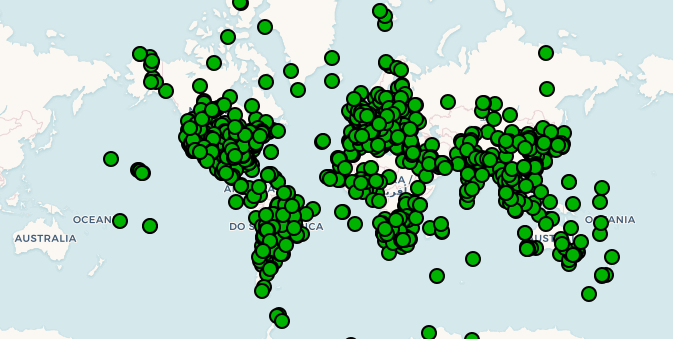
Figure 1. NASA’s AErosol RObotic NETwork sitemap shows all current stations, including AFIT. (Image courtesy of NASA)
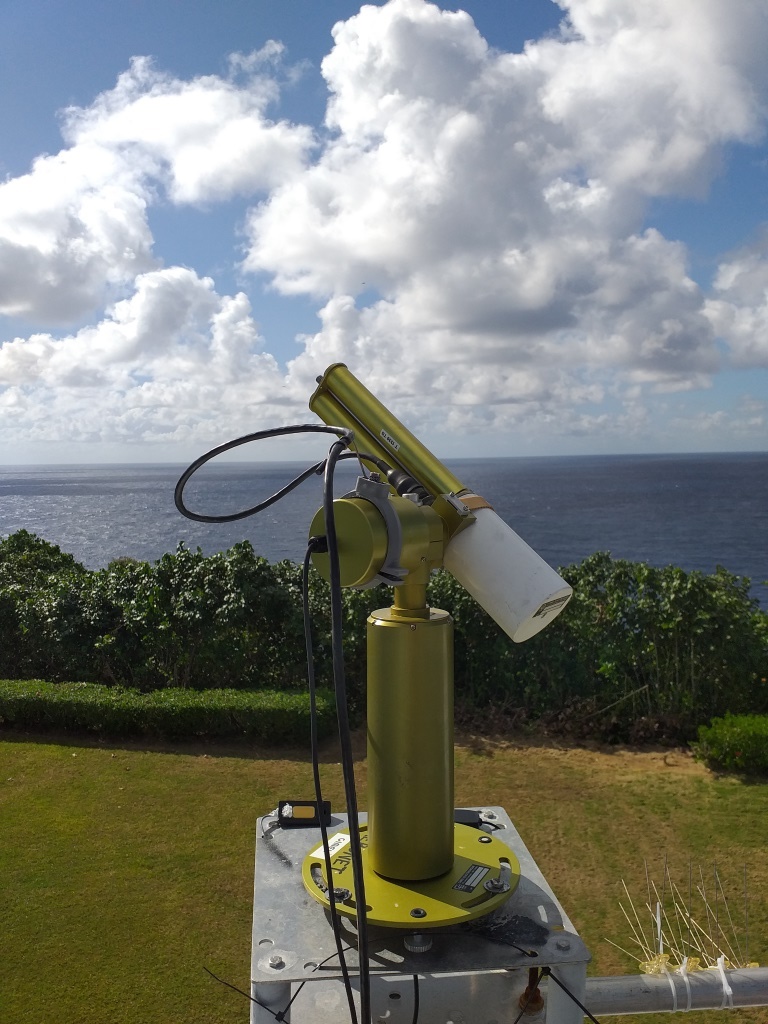
Figure 2. A NASA AERONET sun-lunar photometer in collection mode, staring at the sun. (Image courtesy of NASA)
The sun photometer monitors solar intensity spanning ultra-violet through the near infra-red wavelengths. In turn, the data enables determination of aerosol optical depth (AOD) from the surface to the top of the atmosphere, which is a key indicator of the aerosol loading, or abundance, in a column of air directly above the site.
Some sites employ sun-lunar photometers as does AFIT. The instrument enables AOD measurements, even at night, when solar reflectance from the lunar surface is harnessed. The AERONET data not only benefits AFIT CDE, but also supports space satellite data retrieval and processing to account for atmospheric optical effects. NASA’s AERONET can be viewed at: https://aeronet.gsfc.nasa.gov.
Additionally, AFIT is an active contributor to the NOAA Federated Aerosol Network (NFAN). The NFAN site map is shown in figure 3. The AFIT site, WPB, in concert with other NFAN sites, characterizes aerosol concentration and optical effects such as diurnal and seasonal trends using a wide array of instruments shown in figure 4. Instrumentation includes a condensation particle counter, nephelometer, aethalometer, and absorption photometer.
Recent research includes further validation of small footprint concepts to quantify the effects and properties of micro and nano-aerosols as related to visibility and light extinction [1-2].
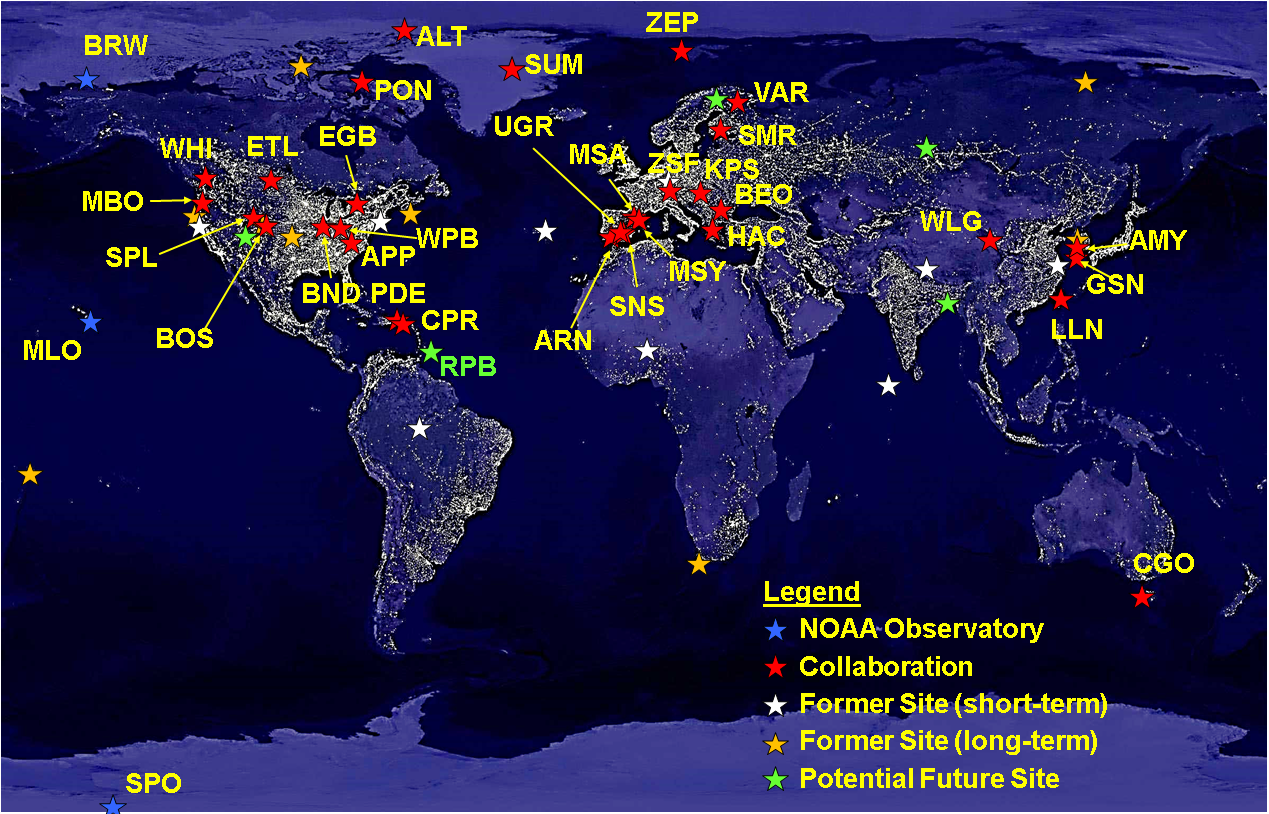
Figure 3. The National Oceanic Atmospheric Administration (NOAA) Federated Aerosol Network (NFAN) site map designates the AFIT site as WPB, or Wright-Patterson AFB. (Image courtesy of NOAA)
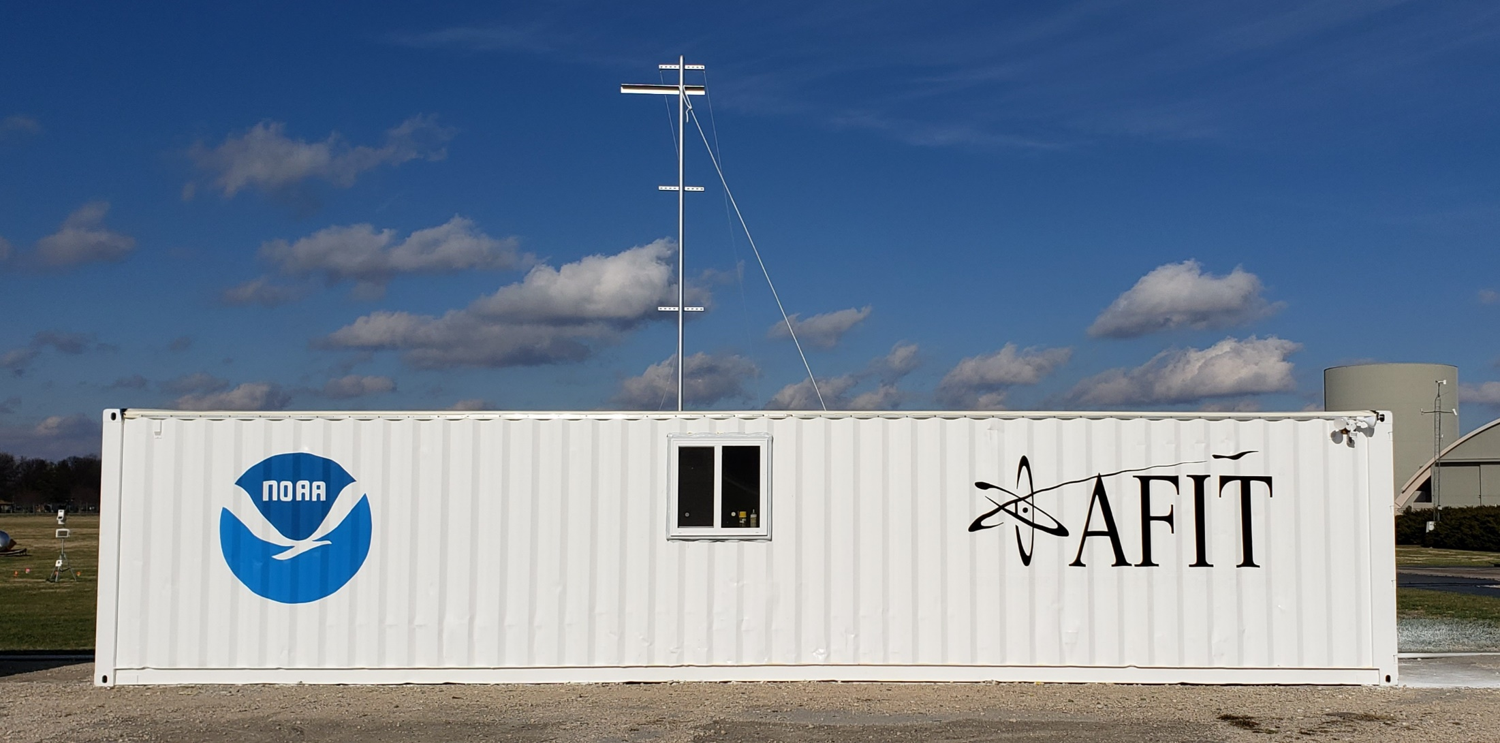
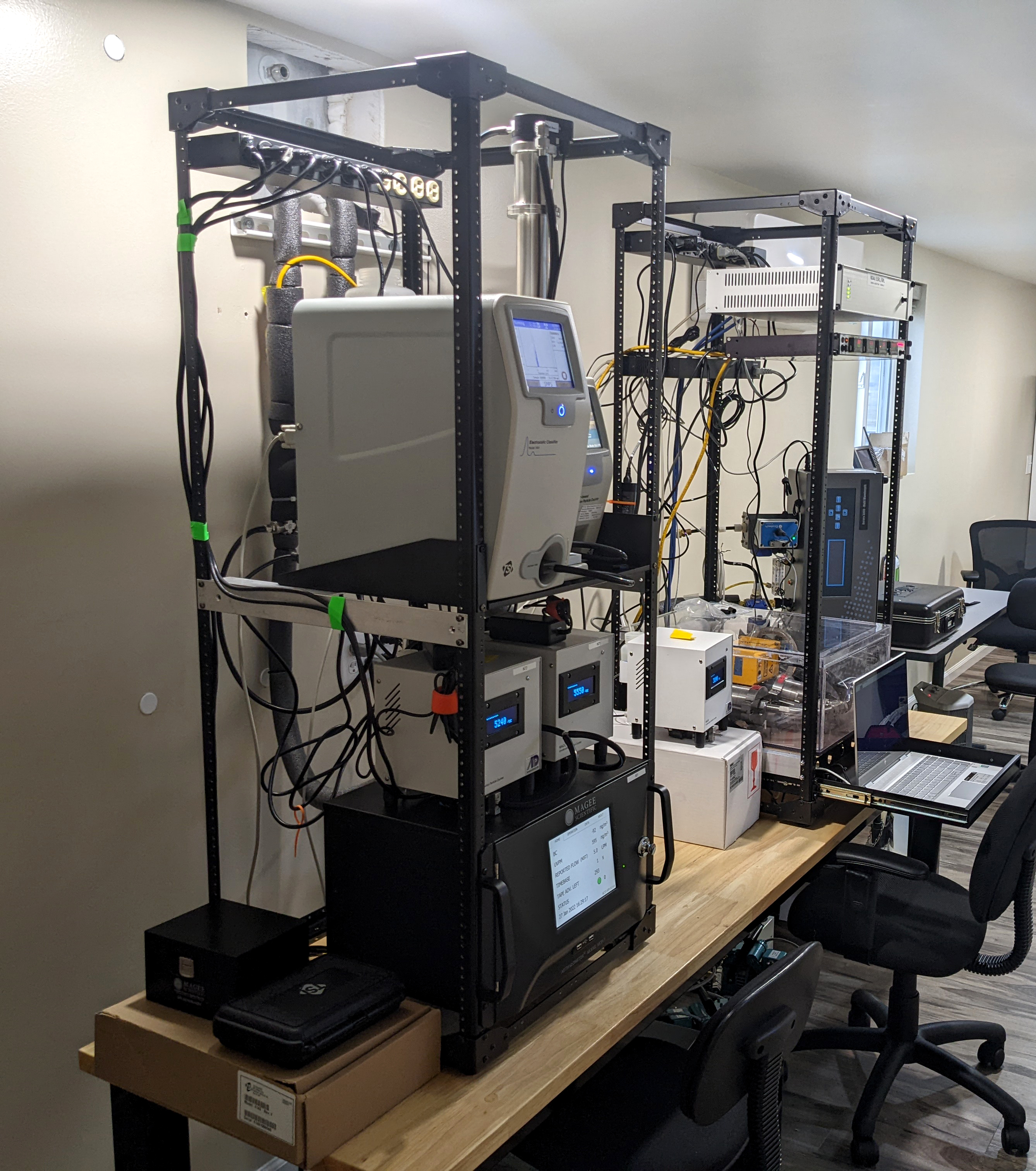
Figure 4. Pictured above, left, is AFIT’s WPB NFAN site. The ambient atmospheric aerosols are sampled through inlets at the top of the mast rising above the CONEX. Ingested aerosols are streamed into the instrumentation enclosed in the CONEX (above, right).
REFERENCES:
1. Turner, H.*, S. Fiorino, K. Keefer, K. Fitch, and J. Schmidt: “Assessment of Visibility from Nano- and Micro-Aerosol Particle Concentration,” Propagation through and Characterization of Atmospheric and Oceanic Phenomena (pcAOP), Optica Imaging and Applied Optics Congress, 18-21 Aug 2025. https://doi.org/10.1364/PCAOP.2025.PM4E.3
2. Fiorino, S., B. Rinaldi*, and K. Keefer, 2025: “Quantifying ambient aerosol absorption and scatter from nano- and micro-particle number concentrations,” Appl. Opt. 64, E62-E75.
*Published while enrolled as graduate student
ABOUT AFIT
AFIT’s Graduate School of Engineering and Management (GSEM) provides in-residence and distance learning graduate degrees and certificates in engineering, applied science, mathematics and management. GSEM provides its students with several significant advantages: a more personalized educational experience, academic programs with a defense-related focus, and research on high-priority defense problems.
AFIT is located at Wright-Patterson AFB, Ohio. AFIT’s mission is to educate defense professionals to innovatively accomplish the deterrence and warfighting missions of the USAF and USSF. AFIT’s vision is to lead defense-focused education, research and consultation to accelerate military superiority across all domains and is accomplished through operationally relevant advanced academic education, research, and professional continuing education. For more information, please visit the AFIT webpage https://www.AFIT.edu/ or contact GSEM outreach at AFIT.EN.Outreach@us.af.mil.
